
Yeast Protein Expression Service
Custom Protein Expression (CPE) offers yeast protein expression services covering Non-GMP research and GMP manufacturing. A Pichia-based platform supports suitable recombinant proteins through construct preparation, transformation and clone screening, small-scale expression and purification, optional fermentation scale-up, and project-defined QC. Yeast can provide secretion and selected eukaryotic processing while remaining distinct from mammalian expression.
Flexible Production Options
A research service and a GMP manufacturing route for appropriately scoped yeast-derived proteins.
Clone- and Secretion-Focused Strategies
Pichia transformation, clone screening and process design based on the target and secretion needs.
Purification & QC Integration
Coordinated small-scale production, optional SEC polishing, fermentation scale-up and analytical delivery.
Yeast Protein Expression Workflow & Stage-Based Pricing
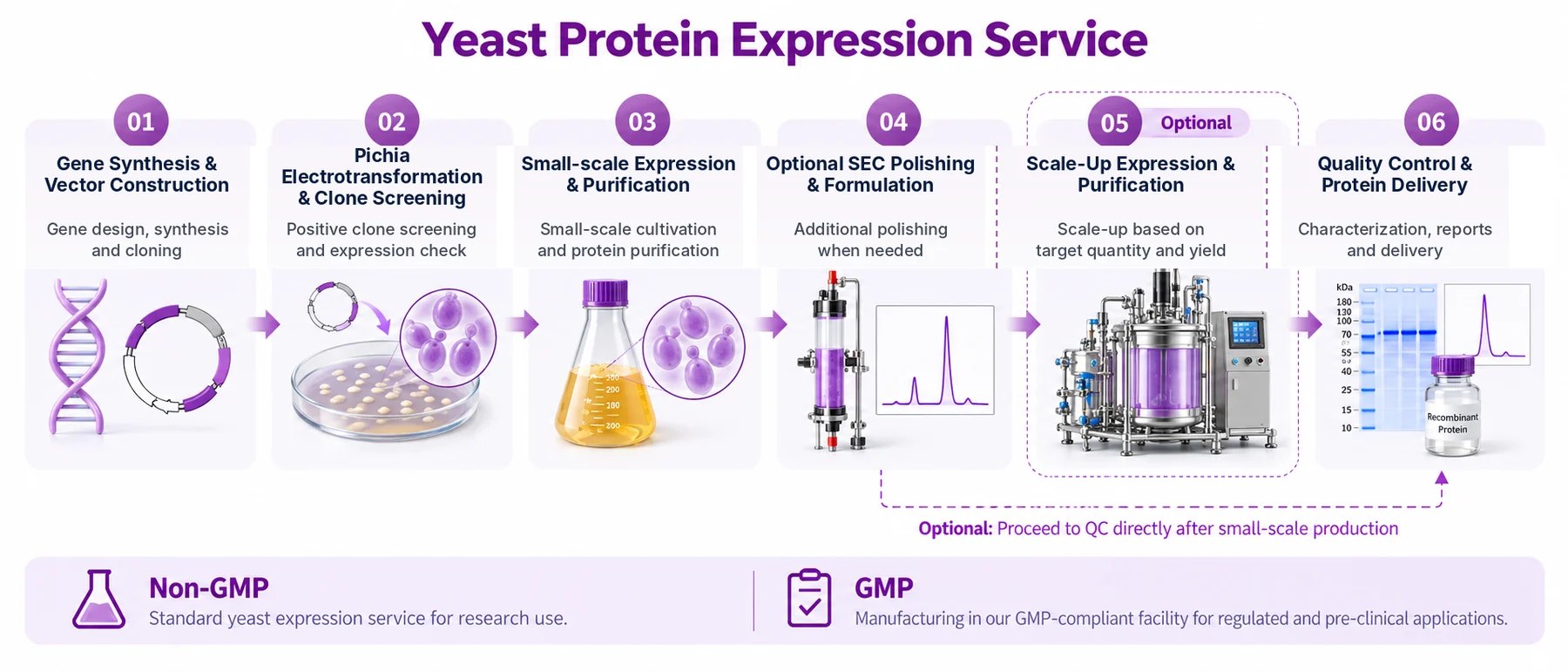
This six-stage yeast workflow links the recorded charging items to the main experimental activities. Pichia electrotransformation and positive-clone screening form the first laboratory fee; the subsequent Small-scale Expression & Purification stage has its own line item. Additional SEC and scale-up production are optional.
Pre-project Assessment
Review the protein sequence, desired tag and secretion strategy, glycosylation sensitivity, product quantity, required activity and purity, downstream application, GMP needs and testing package. A suitable Pichia process plan is established before ordering.
Pricing guide
Stage 01 is priced separately at $1.75/aa for both grades. The bold Small-scale Test Fee after Stage 03 is a subtotal, not an additional charge. Stage 04 and Stage 05 are separately scoped; the Standard Package Total appears with Stage 06.
Showing Non-GMP pricingShowing GMP pricing · Standard Package Total (Stages 02–03 + 06): $5,200$5,900
-
Stage 01: Gene Synthesis & Vector Construction
Prepare a yeast-compatible expression construct based on the target coding sequence and secretion or intracellular format. Signal sequences and tags are selected to support later screening and protein recovery.
Key considerations
Coding region accuracy; integration or expression strategy; promoter selection; secretory signal; tag and downstream QC compatibility.
Deliverables
Construct and sequence records aligned with the selected Pichia workflow.
Linked service / charging itemNon-GMP (USD)GMP (USD)Gene Synthesis & Vector Construction$1.75/aa -
Stage 02: Pichia Electrotransformation & Clone Screening
Introduce the expression construct into Pichia using an electrotransformation workflow, recover transformants and assess positive candidates. Screening focuses on identifying clones appropriate for small-scale expression.
Key considerations
Transformation recovery; construct or integration verification where appropriate; screening design; secretion and productivity; host identity.
Deliverables
Positive Pichia clone candidates and corresponding screening information.
Linked service / charging itemNon-GMP (USD)GMP (USD)Pichia Electrotransformation + Positive Clone Screening$4,520$5,000 -
Stage 03: Small-scale Expression & Purification
Culture selected yeast clones and recover the target protein from the culture supernatant or cell fraction as appropriate. Protein isolation and purification follow an agreed process suited to the target.
Key considerations
Medium and induction strategy; growth and feed conditions; extracellular versus intracellular recovery; glycosylation; downstream yield.
Deliverables
Small-scale purified protein or agreed process sample with available production/QC data.
Small-scale Test Fee is the combined selling price of Stage 02 and Stage 03. It excludes Stage 01, optional SEC/purification add-ons, scale-up and separately quoted special tests.
Linked service / charging itemNon-GMP (USD)GMP (USD)Small-scale Expression & Purification$380$500Small-scale Test Fee — subtotal of Stages 02–03$4,900$5,500 -
Stage 04: Optional SEC Polishing & FormulationOptional
Additional size-exclusion chromatography can be applied when a higher separation of aggregates or size variants is required. Buffer exchange and formulation can be planned to meet the downstream assay needs.
Key considerations
Aggregation; molecular size and protein recovery; buffer stability; target-specific separation behavior.
Deliverables
An SEC-polished sample and associated data when this option is ordered.
This stage is optional and does not change the quoted Small-scale Test Fee unless specifically included in the order. Only GMP SEC has a fixed add-on selling price; Non-GMP SEC is quoted by scope.
Linked service / charging itemNon-GMP (USD)GMP (USD)Optional SEC Purification (if needed)Custom quotation$600 -
Stage 05: Scale-Up Expression & PurificationOptional
When the small-scale outcome is suitable, a fermentation and purification process can be transferred to a larger production scale. The design addresses vessel capability, process parameters and protein recovery.
Key considerations
Fermentation feed and aeration; biomass; secretion or cell breakage; process transfer; purification throughput; batch records.
Deliverables
Scale-up material and purified protein to the agreed specification.
GMP scale-up requires the agreed process-transfer plan, equipment and facility controls, batch instructions and quality records. Exact yield, quantity and lead time are project-specific.
Linked service / charging itemNon-GMP (USD)GMP (USD)Scale-up Expression & PurificationQuotation based on scale/yield -
Stage 06: Quality Control & Protein Delivery
Evaluate final yeast-expressed protein against agreed identity, purity and concentration expectations, and select additional tests for product-related or process-related impurities when needed.
Key considerations
Protein folding and glycan differences; residual host-cell components; stability; endotoxin and microbial needs; GMP documentation.
Deliverables
Agreed protein format, available analytical records and COA or quality documentation.
Standard Package Total includes only the listed small-scale experimental stages and three base QC items. Optional purification/SEC, endotoxin reduction, bioactivity, additional tests, packaging and comprehensive GMP documentation are quoted separately. Endotoxin levels are project-specific targets, not universal guarantees.
Linked service / charging itemNon-GMP (USD)GMP (USD)Native (Non-reducing) PAGE Analysis$75$100Reducing SDS-PAGE Analysis$75$100Standard COA / Study Report$150$200Stage 06 Base QC Subtotal$300$400Standard Package Total (Stages 02–03 + 06)$5,200$5,900Outside the standard packageAdditional Validation TestsCustom quotationOptional Endotoxin RemovalCustom quotation; target <0.1 EU/µg$400; target <0.001 EU/µgBioactivity MeasurementCustom quotation
Routine vs. GMP Protein Production: What Changes?
Both routes can share the core biological expression and purification steps. GMP manufacturing places additional emphasis on controlled facilities, equipment, critical operations, material traceability and evidence of product quality. Specific requirements depend on the intended use and agreed GMP scope.
| Area | Routine / Non-GMP | GMP manufacturing |
|---|---|---|
| Purpose | Small-scale research protein and assay reagents. | Defined GMP batches with planned quality and documentation scope. |
| Facility | Research microbial culture and purification areas. | Controlled fermentation and product-recovery operations with segregation. |
| Cleanroom / environment | Controls suitable for routine fermentation. | Risk-based controls for inoculation, sampling, harvest and open transfers. |
| Equipment | Fit-for-purpose fermentation and purification equipment. | Documented equipment qualification, calibration and cleaning records. |
| Strains & materials | Research yeast strains, media and construct records. | Traceable Pichia strain/seed, feeds, reagents and related records. |
| Process control | Flexible fermentation condition screening. | Controlled pH, oxygen, feed/induction, harvest and batch instructions. |
| Impurities & testing | Protein purity, recovery and requested analytical tests. | Process impurity strategy, identity, purity and additional tests as required. |
| Documentation | Project report and agreed COA. | Batch history, QC review and controlled quality records as scoped. |
GMP Production Requirements: Facility, Cleanrooms and Equipment
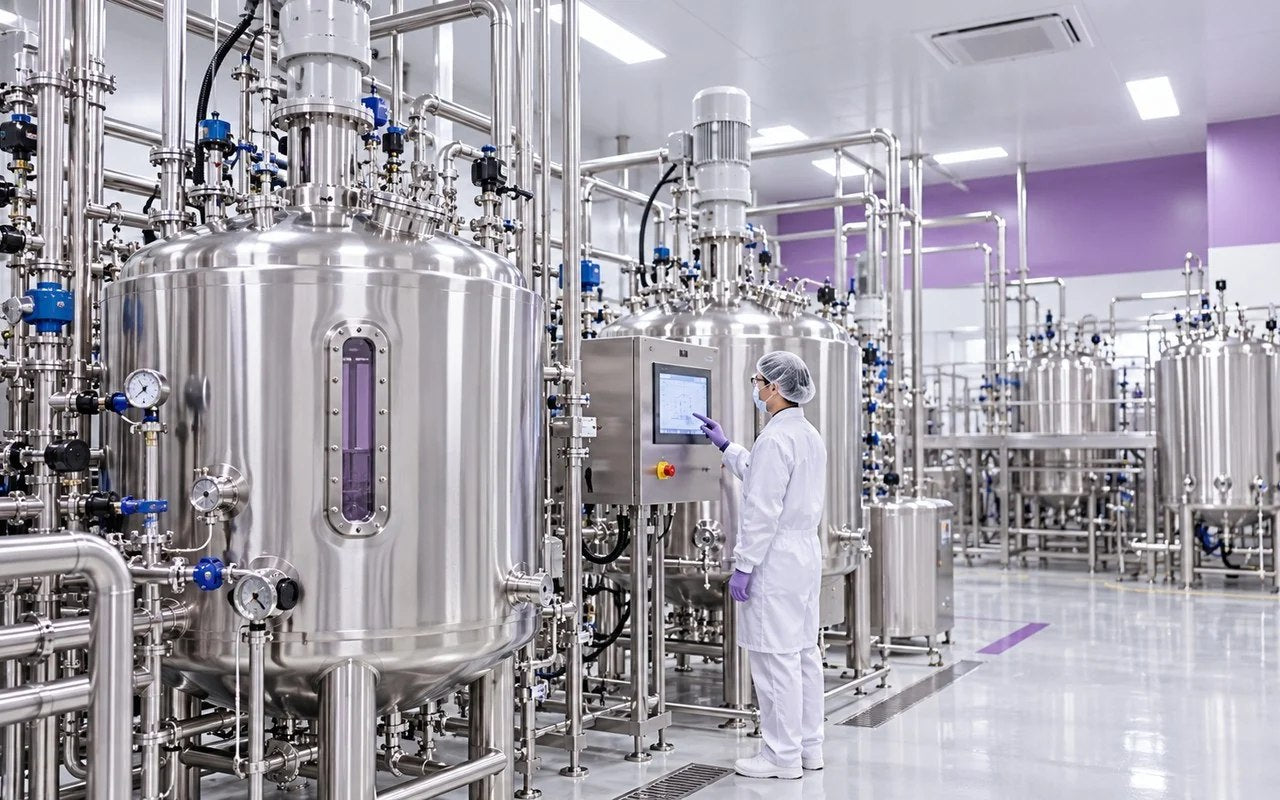
GMP yeast production focuses on controlled microbial fermentation, documented strain provenance and reliable recovery and purification from the specified production route.

GMP-Compliant Facility & Production Areas
Yeast production uses a controlled microbial fermentation framework with defined segregation, material transfers, sanitation and documented operational steps. The facility layout is designed to manage inoculum preparation, fermentation and downstream recovery while reducing the risk of mix-ups or cross-contamination.
Cleanrooms & Environmental Controls
A yeast GMP process may combine contained fermenters with controlled areas for open sampling, product-contact transfers and purification. Cleanroom classification and environmental monitoring are determined by the specific exposure risks and product requirements, not by assigning a single grade to the entire facility.
Equipment Qualification, Utilities & Cleaning
Fermenters, seed-culture equipment, aeration and pH control systems, harvest or separation equipment, purification systems and process-monitoring instruments require appropriate calibration, maintenance and equipment-status records. Cleaning and sanitization controls are selected for the process and intended product.
Raw Materials, Host Systems & Traceability
Controlled sourcing and traceability may cover the Pichia expression strain, plasmid or integration construct, media and feeds, induction reagents, buffers and relevant consumables. Appropriate clone identity, seed records and strain-bank arrangements support consistency when specified for GMP production.
Manufacturing Process & Contamination Controls
Process control centers on inoculum condition, biomass, pH, dissolved oxygen, temperature, feed or induction strategy, production duration and product recovery. Product secretion and yeast-related glycosylation are evaluated as relevant, along with risks from host-cell proteins, nucleic acids and bioburden.
QC, Documentation & Batch Disposition
Quality activities may include identity, purity, concentration, biological activity, residual yeast host-cell components, glycosylation-related attributes and microbiological measures based on intended use. Manufacturing batch records and QC review are scoped separately from the basic COA charge.
GMP scope note
GMP-manufactured does not automatically mean sterile, endotoxin-free or suitable for clinical administration. The applicable specifications, testing and quality documentation are confirmed for the intended application.
Optimizing Difficult Yeast Expression Projects
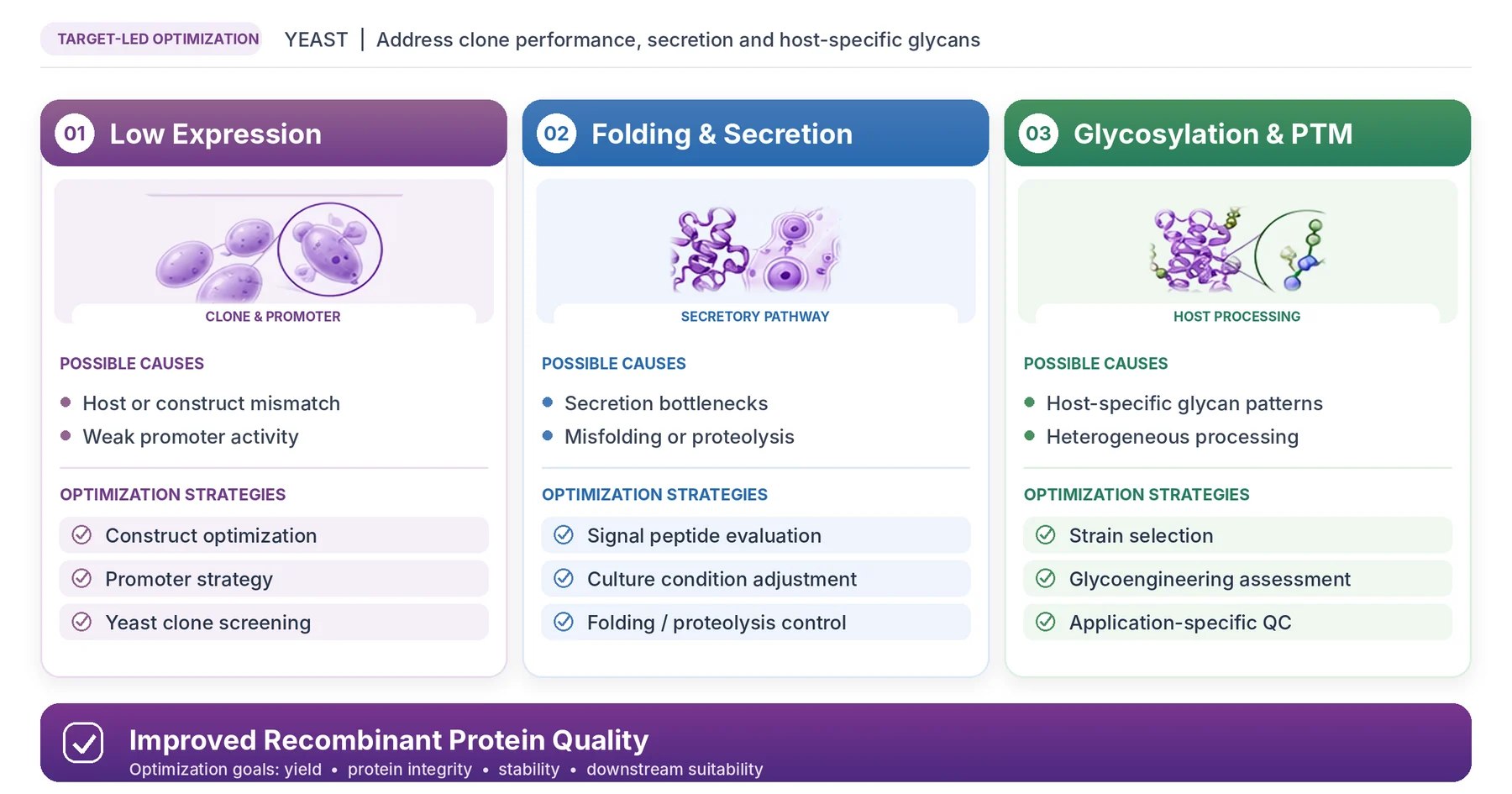
Pichia expression can be affected by clone selection, host-specific folding or secretion limits, glycosylation and culture conditions. The available optimization route is chosen according to the target.
Low Clone Productivity
Codon/construct optimization and selection of productive Pichia transformants can address limited expression. Screening outcomes are target dependent.
Folding and Secretion Bottlenecks
Secretion signal choice, expression conditions and harvest timing can affect recovery and protein integrity. Intracellular expression may require lysis and recovery optimization.
Yeast Glycosylation Differences
Yeast glycans can differ from mammalian patterns. If glycosylation affects downstream function, host selection or specialized characterization may be needed.
Applications
Recombinant Enzymes
Production of suitable secreted or intracellular enzymes for characterization and research assays.
Vaccine and Antigen Research
Preparation of recombinant antigens and protein domains for immunology programs.
Biophysical and Functional Studies
Purified proteins for interaction, stability and activity evaluations.
GMP Production Programs
Controlled yeast fermentation and purification when specified quality oversight or batch records are required.
Frequently Asked Questions
What is the difference between Non-GMP and GMP yeast production?
The expression and fermentation principles may be similar. GMP production adds controlled materials, equipment, facility practices, defined process limits, documentation and quality review tailored to the product and intended use.
Is GMP-grade yeast protein automatically sterile or endotoxin-free?
No. Yeast is not a typical source of bacterial endotoxin, but sterility and endotoxin acceptance are distinct specifications that must be assessed and tested as appropriate. GMP status does not imply either attribute.
What proteins are suitable for yeast expression?
Selected recombinant enzymes, secreted proteins, antigens and other proteins benefiting from some eukaryotic processing can be produced. Targets needing mammalian glycosylation profiles may require another expression system.
How long does a yeast expression or GMP project take?
The schedule depends on construct preparation, transformation and clone screening, expression optimization, fermentation scale and purification or QC needs. A project-specific lead time is confirmed following assessment.
Start Your Custom Yeast Protein Expression Project
Provide the protein sequence or accession, expression region, preferred secretion signal/tag, desired quantity, analytical and endotoxin specifications, required manufacturing grade and requested GMP documents to receive a tailored quote.
Contact Custom Protein Expression (CPE) to confirm your target, manufacturing route, timeline and project-specific quotation.