
Insect Cell / Baculovirus Expression Service
Custom Protein Expression (CPE) provides insect cell and baculovirus protein expression services for Non-GMP research and GMP manufacturing. The baculovirus-insect cell platform supports suitable complex or multi-domain recombinant proteins through construct preparation, Sf9 transfection, expression verification, small-scale production and purification, optional scale-up and quality evaluation. GMP controls are established according to the manufacturing program.
Flexible Production Options
Routine research projects and GMP manufacturing supported by project-specific controls.
Baculovirus-Based Expression Expertise
Recombinant baculovirus preparation and insect cell expression strategies for complex protein targets.
Defined Downstream & QC Support
Small-scale production, optional SEC, larger-scale culture and documented quality assessment.
Insect Cell / Baculovirus Expression Workflow & Stage-Based Pricing
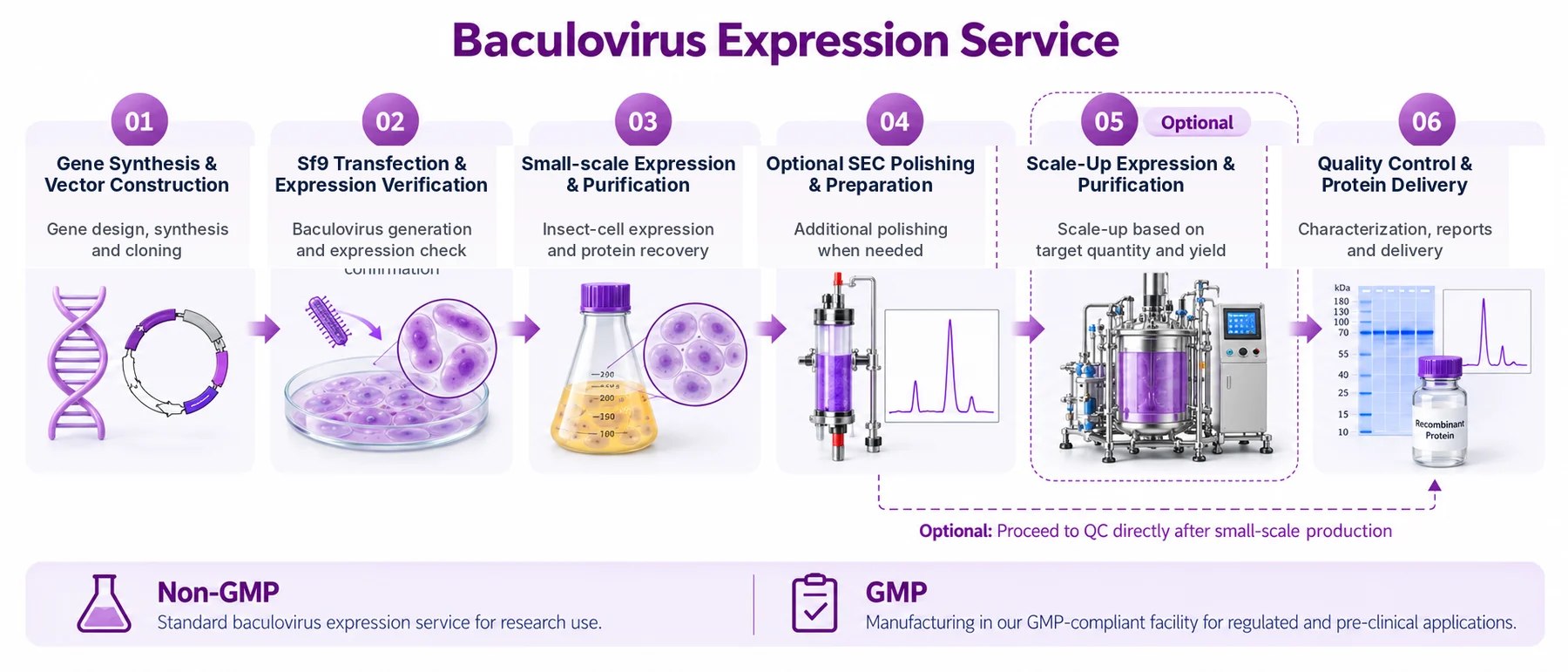
This six-stage sequence reflects the insect-cell quotation items while retaining the technical role of recombinant baculovirus. Sf9 transfection and expression verification lead into Small-scale Expression & Purification; SEC polishing and scale-up are optional extensions. GMP process records and controls are planned to fit the product.
Pre-project Assessment
The project review considers sequence/domain boundaries, intended protein format, target amount, expression host preferences, required activity, purity and endotoxin specifications, downstream purpose and GMP documentation expectations.
Pricing guide
Stage 01 is priced separately at $1.75/aa for both grades. The bold Small-scale Test Fee after Stage 03 is a subtotal, not an additional charge. Stage 04 and Stage 05 are separately scoped; the Standard Package Total appears with Stage 06.
Showing Non-GMP pricingShowing GMP pricing · Standard Package Total (Stages 02–03 + 06): $4,000$8,900
-
Stage 01: Gene Synthesis & Vector Construction
Design the target coding region and select an expression vector compatible with the baculovirus-insect cell system. Constructs may include an affinity tag or secretion-related elements where appropriate.
Key considerations
Sequence correctness; baculovirus vector compatibility; protein domains; processing signals; tag arrangement and strain/cell-bank traceability.
Deliverables
Agreed expression construct and sequence information.
Linked service / charging itemNon-GMP (USD)GMP (USD)Gene Synthesis & Vector Construction$1.75/aa -
Stage 02: Sf9 Transfection & Expression Verification
Use a suitable insect-cell/baculovirus construction workflow to introduce the target and assess expression in Sf9 cells. Recombinant baculovirus preparation, host compatibility and infection conditions are considered during verification.
Key considerations
Transfection performance; recombinant virus handling; expression confirmation; inoculum quality; host-cell response and viral passage controls.
Deliverables
Expression verification results and the agreed recombinant baculovirus or culture materials.
Linked service / charging itemNon-GMP (USD)GMP (USD)Transfection of Sf9 Insect Cells & Expression Verification$3,330$8,000 -
Stage 03: Small-scale Expression & Purification
Produce the protein in infected insect cell cultures and recover it from cells or culture medium as appropriate. Small-scale purification uses a target-compatible recovery strategy.
Key considerations
Infection timing and multiplicity where applicable; cell viability; production duration; target solubility; clarification and purification yield.
Deliverables
Purified small-scale recombinant protein or agreed recovered material and supporting data.
Small-scale Test Fee is the combined selling price of Stage 02 and Stage 03. It excludes Stage 01, optional SEC/purification add-ons, scale-up and separately quoted special tests.
Linked service / charging itemNon-GMP (USD)GMP (USD)Small-scale Expression & Purification$370$500Small-scale Test Fee — subtotal of Stages 02–03$3,700$8,500 -
Stage 04: Optional SEC Polishing & PreparationOptional
Size-exclusion chromatography can be added to separate protein size variants or aggregates when needed. Additional polishing and buffer/formulation choices are adjusted for product structure and stability.
Key considerations
Aggregation; oligomeric state; protein stability; purification recovery; downstream activity needs.
Deliverables
An SEC-polished protein sample when ordered.
This stage is optional and does not change the quoted Small-scale Test Fee unless specifically included in the order. Only GMP SEC has a fixed add-on selling price; Non-GMP SEC is quoted by scope.
Linked service / charging itemNon-GMP (USD)GMP (USD)Optional SEC Purification (if needed)Custom quotation$600 -
Stage 05: Scale-Up Expression & PurificationOptional
Larger-scale insect cell production can follow a suitable small-scale result, with planned recombinant baculovirus production, infection and product recovery. The manufacturing pathway is reviewed for the selected grade.
Key considerations
Inoculum and virus lot controls; infection parameters; culture performance; process transfer; purification capacity; GMP record requirements.
Deliverables
Agreed quantity of recombinant protein and project-specified manufacturing documentation.
GMP scale-up requires the agreed process-transfer plan, equipment and facility controls, batch instructions and quality records. Exact yield, quantity and lead time are project-specific.
Linked service / charging itemNon-GMP (USD)GMP (USD)Scale-up Expression & PurificationQuotation based on scale/yield -
Stage 06: Quality Control & Protein Delivery
Select fit-for-purpose tests and documentation for the expressed protein. The test plan may need to consider virus-related or insect-host-derived impurities in addition to the desired product characteristics.
Key considerations
Identity and purity; concentration; aggregates; bioactivity; residual host-cell components or baculovirus-related materials as appropriate; sterility/endotoxin specifications.
Deliverables
Protein sample(s) with agreed analytical outputs, standard COA/study report and any separately scoped GMP records.
Standard Package Total includes only the listed small-scale experimental stages and three base QC items. Optional purification/SEC, endotoxin reduction, bioactivity, additional tests, packaging and comprehensive GMP documentation are quoted separately. Endotoxin levels are project-specific targets, not universal guarantees.
Linked service / charging itemNon-GMP (USD)GMP (USD)Native (Non-reducing) PAGE Analysis$75$100Reducing SDS-PAGE Analysis$75$100Standard COA / Study Report$150$200Stage 06 Base QC Subtotal$300$400Standard Package Total (Stages 02–03 + 06)$4,000$8,900Outside the standard packageAdditional Validation TestsCustom quotationOptional Endotoxin RemovalCustom quotation; target <0.1 EU/µg$400; target <0.001 EU/µgBioactivity MeasurementCustom quotation
Routine vs. GMP Protein Production: What Changes?
Both routes can share the core biological expression and purification steps. GMP manufacturing places additional emphasis on controlled facilities, equipment, critical operations, material traceability and evidence of product quality. Specific requirements depend on the intended use and agreed GMP scope.
| Area | Routine / Non-GMP | GMP manufacturing |
|---|---|---|
| Purpose | Research antigens, complex proteins and assay development. | GMP programs requiring qualified manufacture and documented control. |
| Facility | Appropriate insect cell / virus handling research areas. | Controlled zones and procedures for virus and cell handling. |
| Cleanroom / environment | Research containment and contamination controls. | Risk-based controlled areas for open stages and product-contact handling. |
| Equipment | Cell culture vessels, transfection and purification tools. | Qualified/calibrated critical culture, transfer and downstream systems. |
| Cell and viral inputs | Research insect cell and baculovirus records. | Traceable host cell and recombinant virus stock information. |
| Process control | Flexible infection and expression screening. | Controlled infection, passage, harvest and in-process records. |
| Product / process impurities | Protein assay panel fitted to research use. | Host/virus-related impurity testing and other specifications as applicable. |
| Documentation | Study report and COA as agreed. | GMP batch records and planned quality review or release documents. |
GMP Production Requirements: Facility, Cleanrooms and Equipment
GMP baculovirus-insect cell production requires defined controls for insect host cells, recombinant virus materials, culture infection and downstream removal of relevant process impurities.
GMP-Compliant Facility & Production Areas
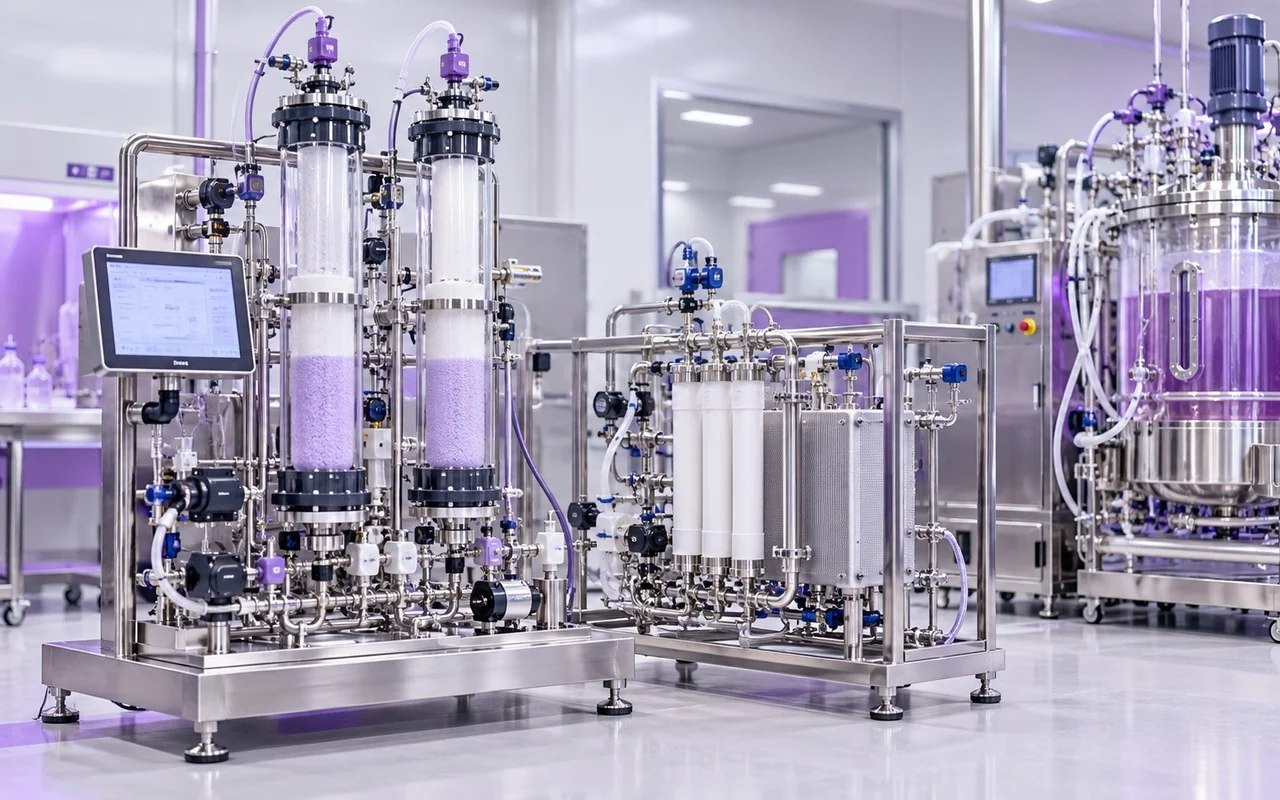
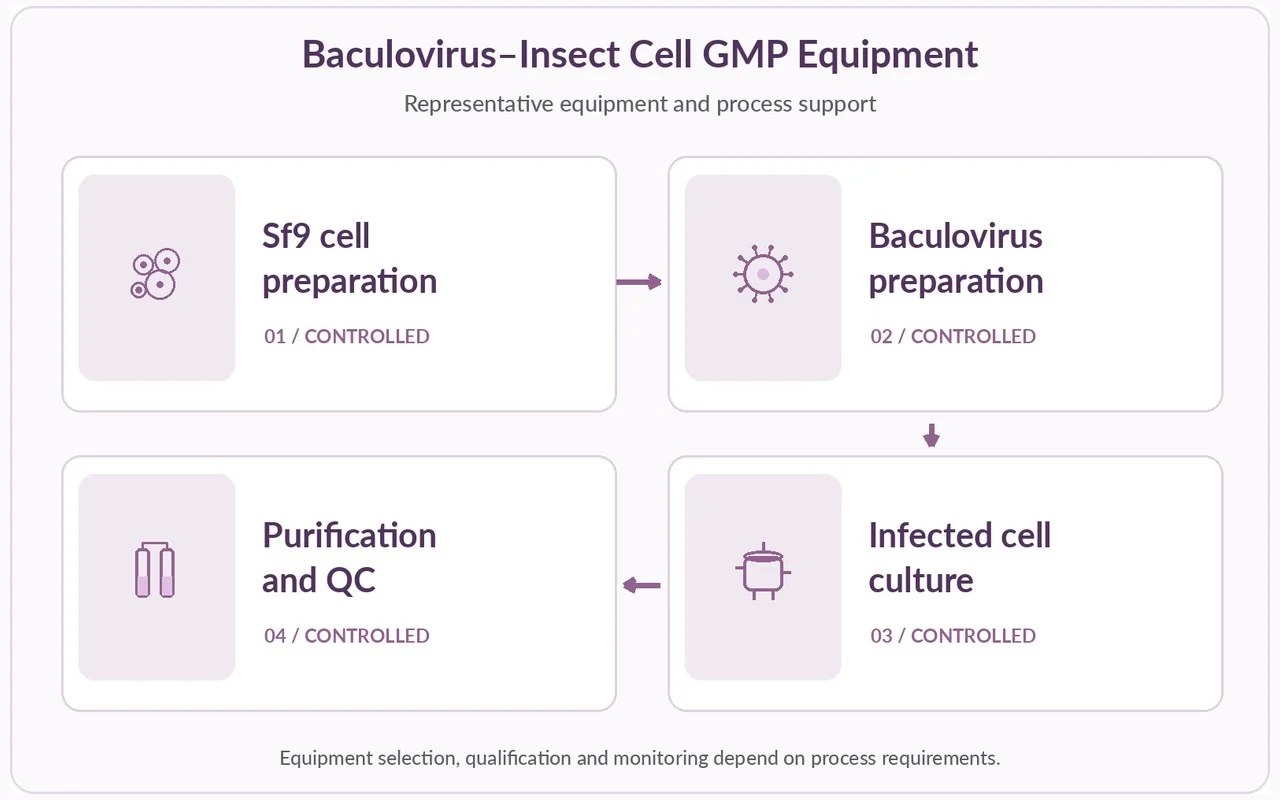
Baculovirus-insect cell production benefits from defined separation of cell preparation, recombinant baculovirus handling, culture infection and downstream purification activities. For GMP programs, CPE applies facility controls and contamination-management procedures consistent with the agreed manufacturing scope.
Cleanrooms & Environmental Controls
Insect cell processing may use closed or contained culture systems; open operations, sampling and post-harvest transfers require appropriate risk-based environmental measures. Room classification, gowning and monitoring are chosen for the particular manufacturing activities. GMP does not automatically mean aseptic final filling.
Equipment Qualification, Utilities & Cleaning
Relevant equipment can include Sf9 culture vessels, controlled bioreactors, clean handling stations, centrifuges or clarification systems, chromatography equipment and analytical platforms. Documented equipment qualification, calibration, cleaning and maintenance support reliable GMP operation.
Raw Materials, Host Systems & Traceability
GMP manufacturing plans address insect host-cell provenance, identity and culture history, expression constructs and recombinant baculovirus stock controls, media, buffers and critical consumables. Suitable documentation is chosen to manage adventitious-agent or cross-contamination risks.
Manufacturing Process & Contamination Controls
Critical variables may include cell density and viability, recombinant virus identity or titer as appropriate, infection timing, process temperature, harvest window and protein recovery. Viral stock management, passage tracking and host-related impurity controls are tailored to the program.
QC, Documentation & Batch Disposition
Analytical scope can include protein identity, purity, potency, aggregation and selected residual host-cell or virus-related materials. Required viral-safety evaluation or clearance studies, if relevant to intended use, are not assumed to be included in a standard small-scale price; they require separate project assessment.
GMP scope note
GMP-manufactured does not automatically mean sterile, endotoxin-free or suitable for clinical administration. The applicable specifications, testing and quality documentation are confirmed for the intended application.
Optimizing Difficult Insect Cell / Baculovirus Expression Projects
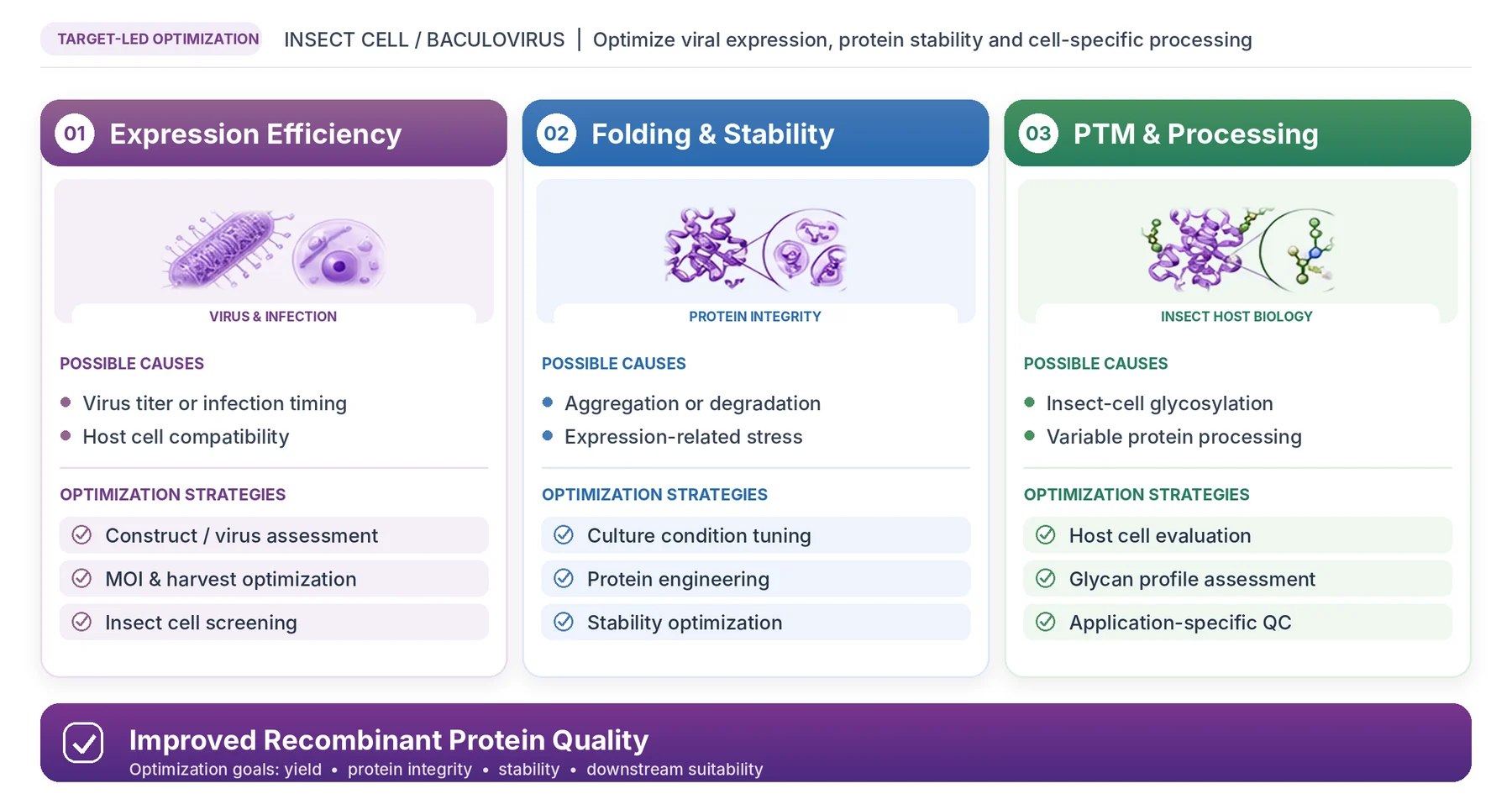
Baculovirus-insect cell expression can be limited by virus construct behavior, infection parameters, protein stability or host-specific processing. Practical optimization focuses on these variables.
Expression Efficiency
Baculovirus construct optimization, Sf9 cell condition and infection parameters affect expression. Verification and screening guide any changes.
Folding and Product Stability
Multi-domain or complex proteins may be sensitive to culture and recovery conditions. Appropriate temperature, harvest timing, buffers and handling can support quality.
Host and Virus-Related Attributes
Insect cell glycosylation differs from mammalian cells; residual viral or cellular materials may matter in regulated uses. Application-specific characterization is selected as needed.
Applications
Structural and Functional Biology
Large or multi-domain proteins for structural studies and interaction analysis.
Viral Antigens and Research Reagents
Production of suitable viral proteins and antigen preparations for immunology research.
Drug Discovery Programs
Target characterization, binding assays, enzyme studies and lead-screening reagents.
GMP Protein Programs
Controlled insect cell/baculovirus production for materials with defined manufacturing and documentation requirements.
Frequently Asked Questions
What is the difference between Non-GMP and GMP insect cell expression?
Both may use a baculovirus-insect cell production pathway. GMP projects additionally define facility controls, source material and virus-stock traceability, approved processing, quality testing and manufacturing documentation.
Is GMP-grade baculovirus-expressed protein sterile or endotoxin-free?
No. GMP manufacture does not automatically establish sterility or the absence of endotoxin. Product-specific microbial, endotoxin and any virus-related quality requirements must be assessed and tested separately.
What proteins can be expressed using the baculovirus-insect cell system?
Selected viral antigens, multi-domain proteins, enzymes and complex recombinant targets can be produced. Protein folding, glycosylation and functional requirements determine whether this system is suitable.
How long does a baculovirus expression or GMP project take?
Timing varies with construct and recombinant baculovirus preparation, Sf9 screening, infection/harvest optimization, purification, scale and the requested GMP quality package.
Start Your Custom Insect Cell / Baculovirus Expression Project
For a technical quotation, send the target sequence, construct preferences, protein quantity, desired activity and QC specifications, preferred Non-GMP/GMP route and any baculovirus or regulatory documentation expectations.
Contact Custom Protein Expression (CPE) to confirm your target, manufacturing route, timeline and project-specific quotation.